







Service Rated on Feefo.com
Key Information & FAQs on Walk-in Baths and Accessible Showers
If mobility concerns are making your bathroom difficult or unsafe to use, an accessible bathing solution can help restore your independence and peace of mind.


Service Rated on Feefo.com
If mobility concerns are making your bathroom difficult or unsafe to use, an accessible bathing solution can help restore your independence and peace of mind.
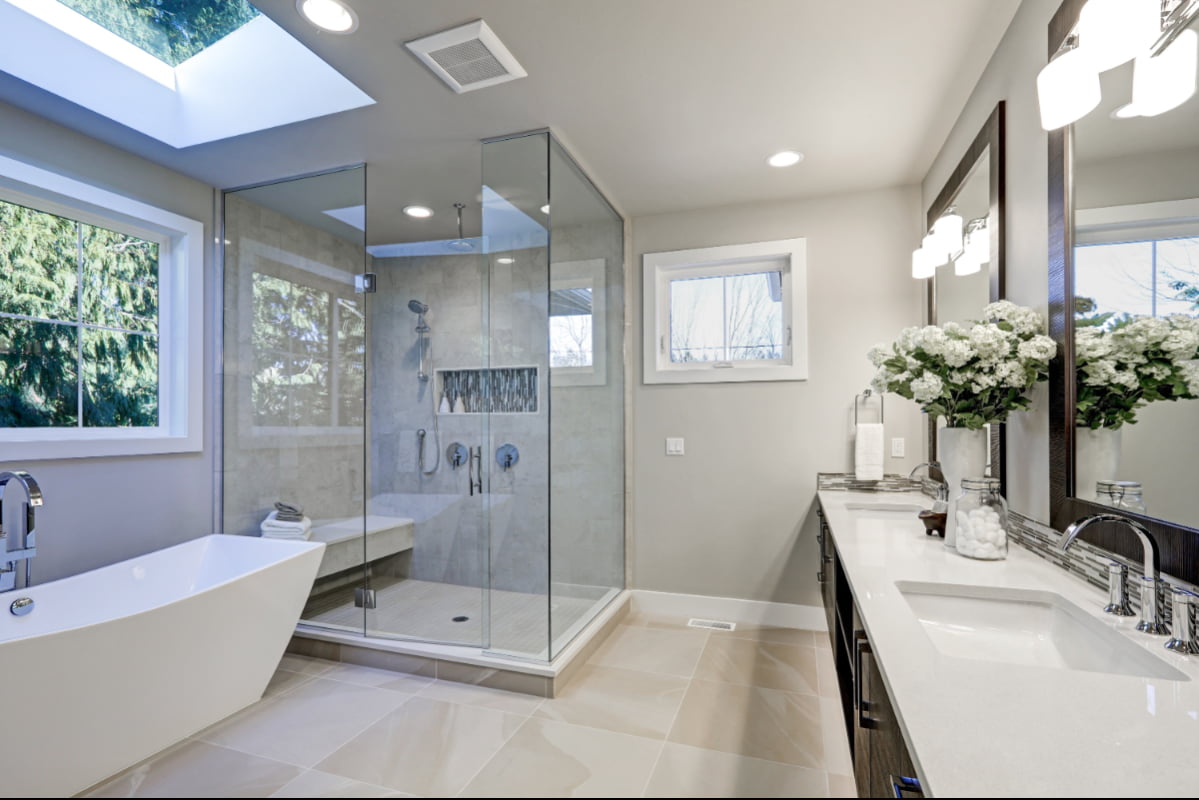
Walk-in baths and walk-in showers are ideal upgrades as they can be installed efficiently, and usually without the need for a full bathroom remodel.
This guide answers the most common questions about these mobility bathroom solutions.
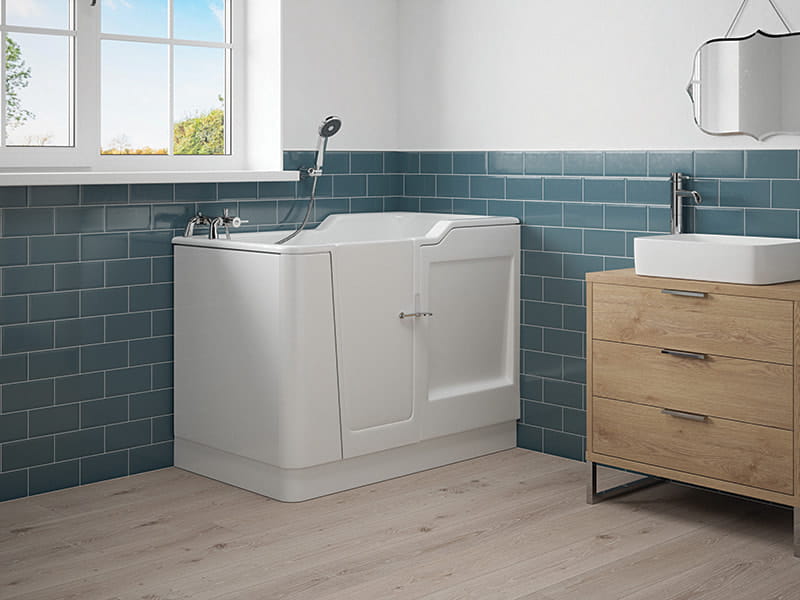
Walk-in baths are designed for easy access. They feature a low threshold (typically 8–9 inches, ~20cm) and a watertight door, eliminating the need to step over a high tub side.
The process differs from a standard bath:
Tip for Comfort: To prevent feeling cold during the drain/fill cycle, consider investing in a model with a heated seat.
The water volume depends on the model:
Experts will assess your home’s water pressure during a free home visit to give you an estimated filling time.
No, they shouldn’t. Every walk-in bath is manufactured with a high-quality, watertight door seal that is rigorously tested to ensure zero leakage when properly closed.
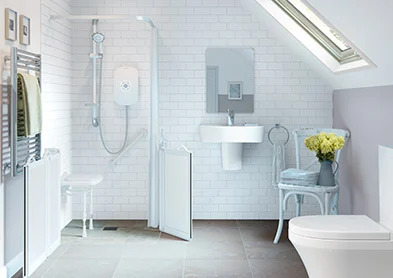
A floor level walk-in shower provides a safe, slip-resistant, and low-mobility bathing solution.
Key features include:
A wet room is the ultimate level-access showering solution. Since the entire floor is waterproofed and gently sloped towards the drain, there is no shower tray to step over. This makes it the perfect and safest solution for wheelchair users and those with greater mobility difficulties.
Our walk-in shower designs are engineered for minimal splash. This is achieved through sloping floors, carefully positioned showerheads, and the use of professionally fitted glass panels or enclosures, further reducing the risk of a wet, slippery floor.
Yes, you may be eligible for financial support, such as a Disabled Facilities Grant (DFG), to help cover the cost of your walk-in shower or bath installation.
We hope this guide answers your initial questions. Please get in touch if you have any more questions, or would like to arrange a home visit.


